ZStack Cloud 5.1.0
Highlights
- Allows elastic baremetal instances to connect with a new-generation high-performance distributed storage to enjoy a higher-performance and lower-latency storage service.
- Supports IPv6 protocol in all LBs and HA in dedicated-performance LB, improving network security and business stability.
- Allows you to modify the type and VLAN ID/VNI of L2 networks online, improving network O&M flexibility.
- Supports hot migration and HA for VM instances with VF NICs attached, protecting business continuity.
Overview
- Enhancements on the VM memory reclaim mechanism.
- Allows you to enable/disable Memory Balloon and Kernel Same-Page Merging for a VM instance individually.
- Provides a host memory monitoring that displays the memory reclaimed/shared/saved in a more intuitive way.
- Improvements on VM HA mechanism, making HA reboots no longer occur after you stop VM instances manually or through a scheduled job.
- Allows you to limit the migration rate during VM storage migration.
- Supports hot migration and HA for VM instances with VF NICs attached.
- Allows elastic baremetal instances to connect with new-generation high-performance distributed storage.
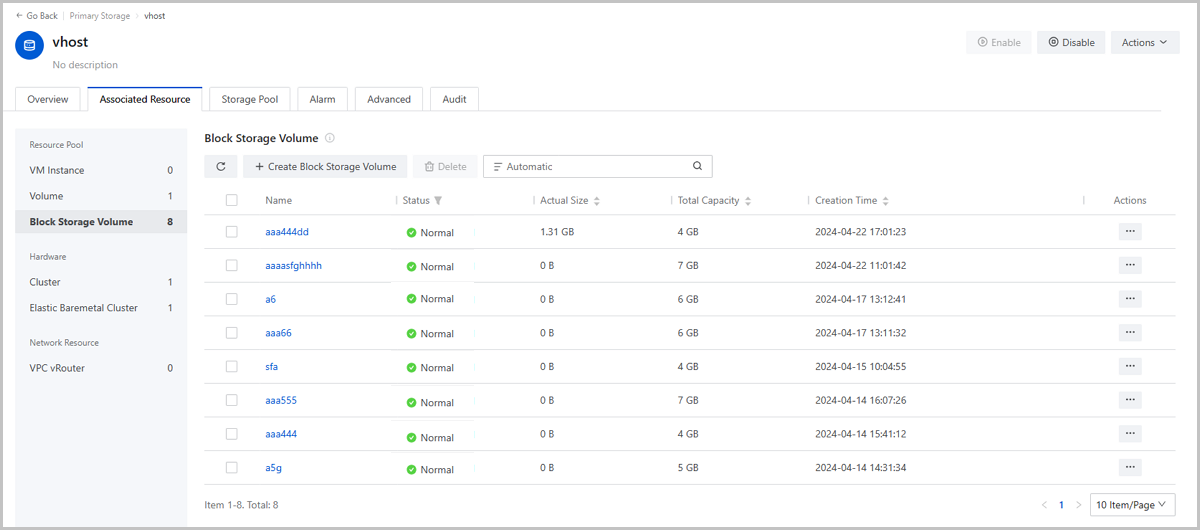
- Supports the lifecycle and snapshot management of block storage volumes based on high-performance Vhost primary storage.
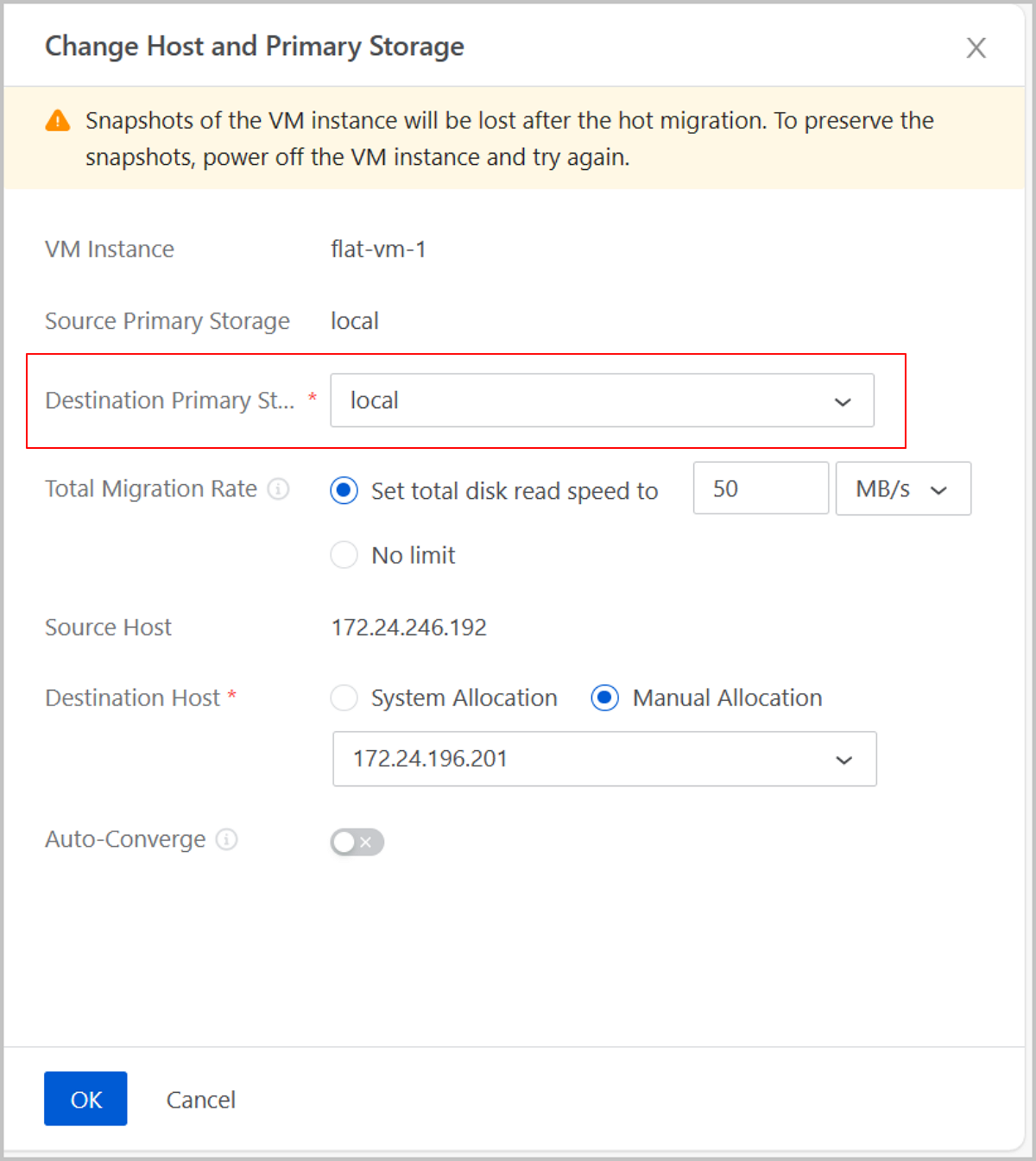
- Allows you to hot migrate a VM instance across LocalStorage.
- Load balancing enhancements.
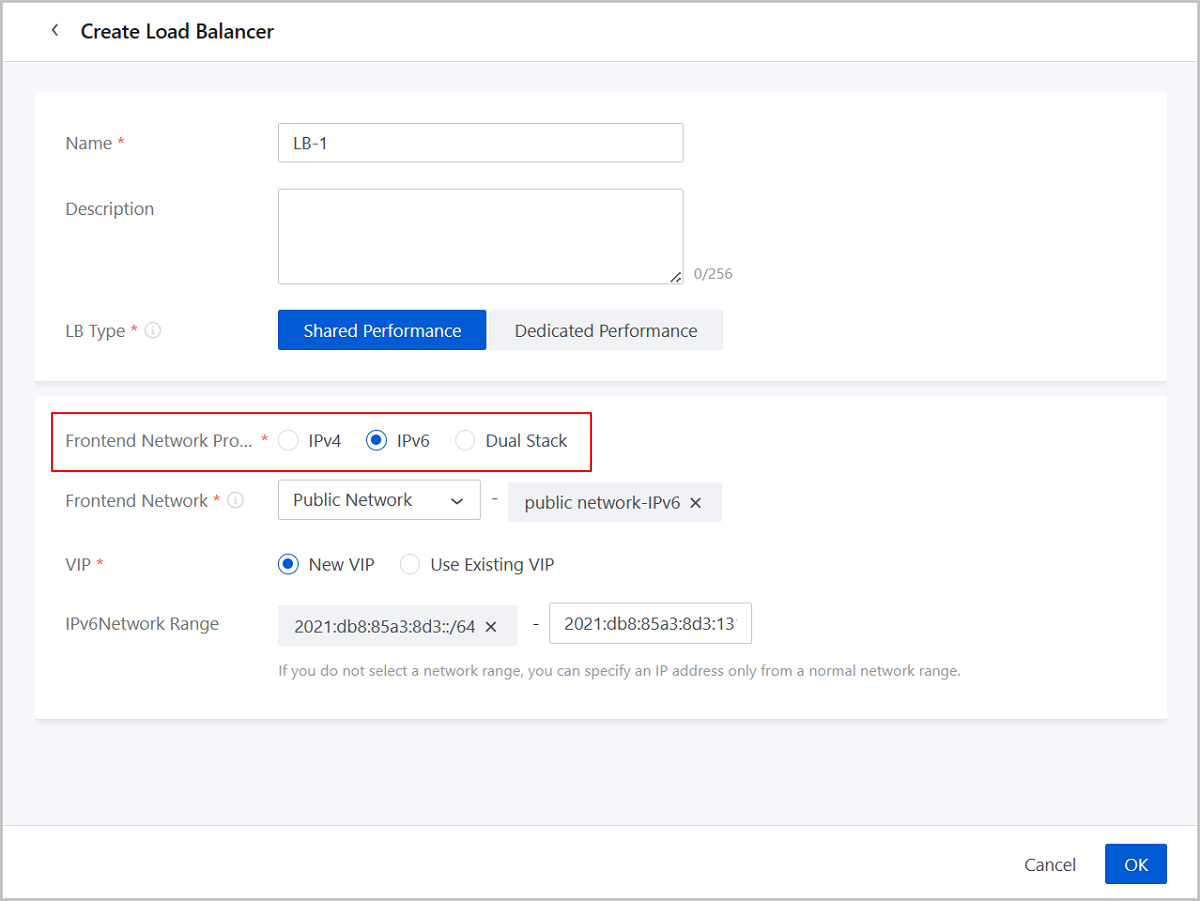
- Adds support for IPv6 protocol in LB, improving network performance and security.
- Dedicated-performance LB now supports HA, ensuring business stability.
- Improvements on LB listeners.
- A new network service, shared bandwidth, allowing multiple VM instances to share bandwidth resources.
- Allows you to modify the type and VLAN ID/VNI of L2 networks online, improving the network O&M flexibility.
- No longer uses 223.5.5.5 as the default DNS address for L3 networks.
- Allows you to obtain the monitoring data of more Cloud resources through SNMP.
- Allows you to view HA log and auto-scheduling log details.
- Volume export improvements.
- Allows you to export information of data volumes and root volumes simultaneously.
- Allows you to customize the information items to be exported.
VM Instance
Enhancements on the VM memory Reclaim Mechanism
In previous versions, ZStack Cloud has provided memory reclaim and sharing mechanisms that help ensure the efficient use of host memory through memory dynamic allocation and de-duplication.
Starting from 5.1.0, ZStack Cloud further enhances the memory reclaim and sharing mechanisms, making the mechanisms can take effect in a finer granularity and providing a more intuitive monitoring to displays the host memory changes.
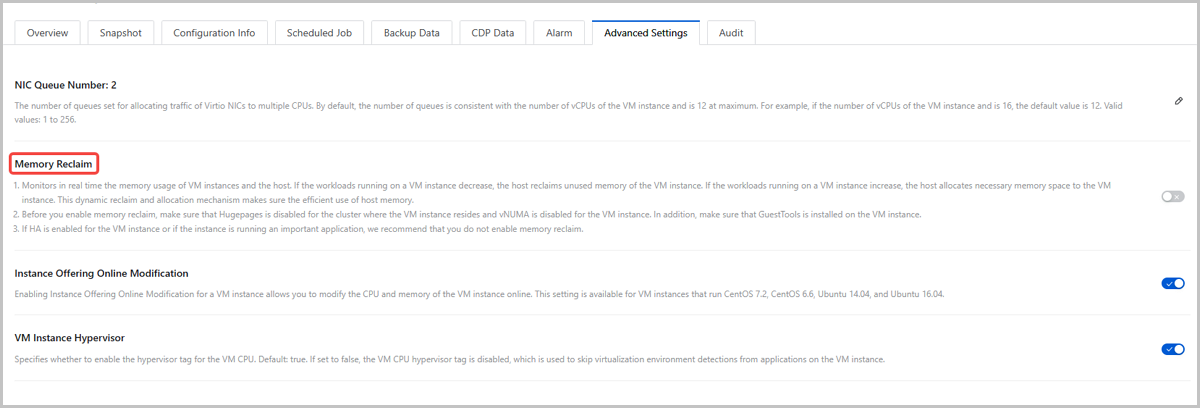
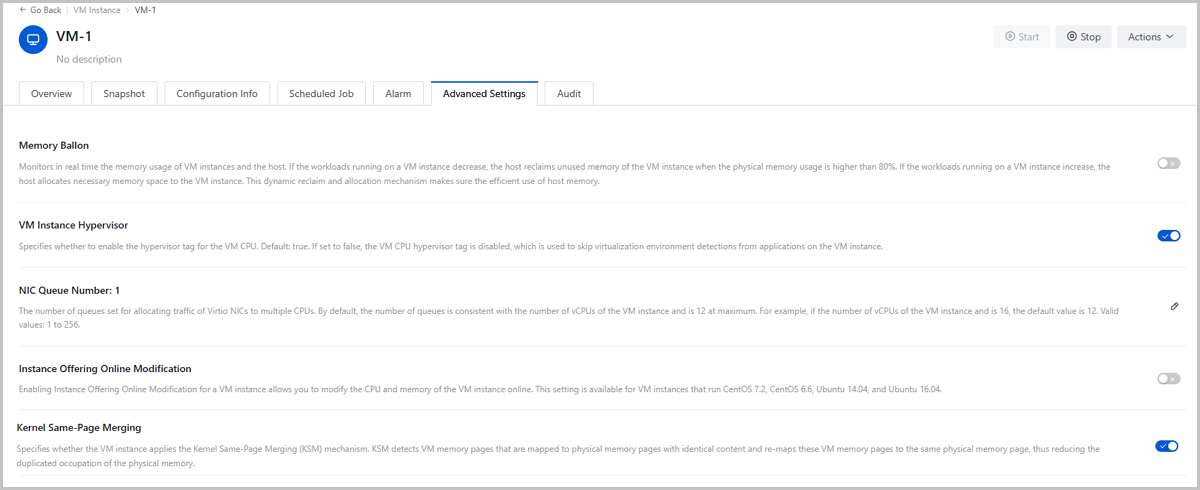
Allows You to Enable/Disable Memory Balloon and Kernel Same-Page Merging for an individual VM Instance
- Memory Balloon: The setting called Memory Reclaim in previous
versions is renamed as Memory Balloon in 5.1.0. This mechanism
monitors the host and VM memory utilization in real-time and ensures a high
host memory use efficient by allocating/reclaiming memory to/from VM
instances dynamically.
- Reclaim: If the VM workloads decreases, a part of its free memory is reclaimed to the host when the host memory utilization is higher than 80%. The reclaimed memory can be allocated to those VM instances with increasing workloads.
- Allocate: If the VM workloads increases, the host allocates more memory to it to ensure the business stability.
- Kernel Same-Page Merging: A mechanism realizing the host memory sharing. This mechanism scans the VM memory page periodically, detecting whether multiple VM memory pages are mapped to physical memory pages with identical content and re-mapping these VM memory pages to one physical memory page. This allows multiple VM instances to share host memory and reduce resource wastes.
The two mechanisms mentioned above ensure a high use efficient of host memory. However, for VM instances that are running important businesses, these mechanisms may bring a performance influence. Starting from 5.1.0, you can enable/disable Memory Balloon or Kernel Same-Page Merging for a VM instance individually on its action list or details page. VM instances with Memory Balloon and Kernel Same-Page Merging disabled can enjoy more dedicated and stable memory spaces.
Provides a Host Memory Monitoring that Displays the Memory Reclaimed/Shared/Saved in a more Intuitive Way
- Reclaimed through Memory Balloon: Displays the memory size reclaimed from VM instances with decreasing workloads.
- Shared by VM Instances: Displays the memory size that is shared by multiple VM instances because of the Kernel Same-Page Merging mechanism.
- Economized through KSM: Displays the memory size saved because of the Kernel Same-Page Merging mechanism.

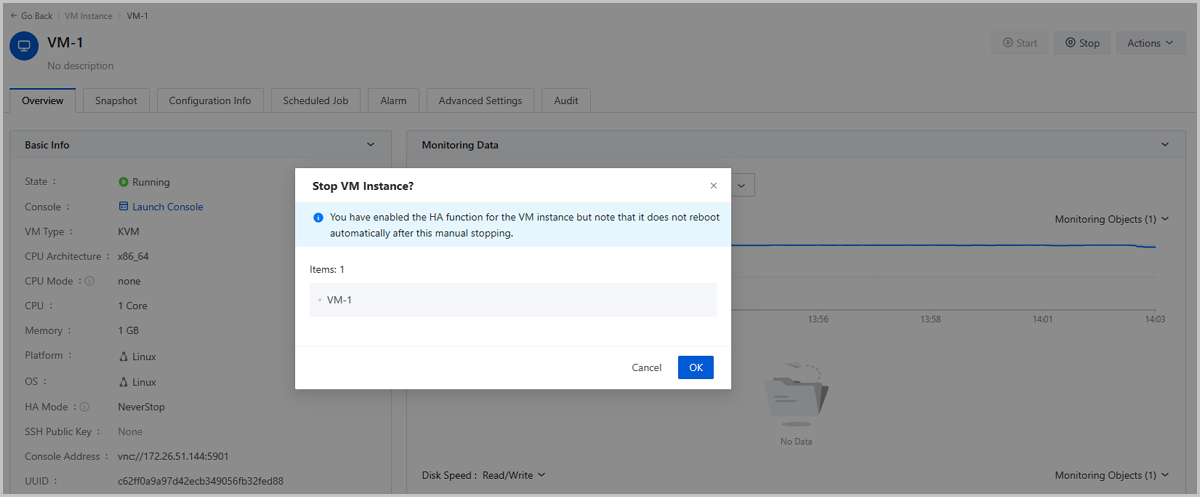
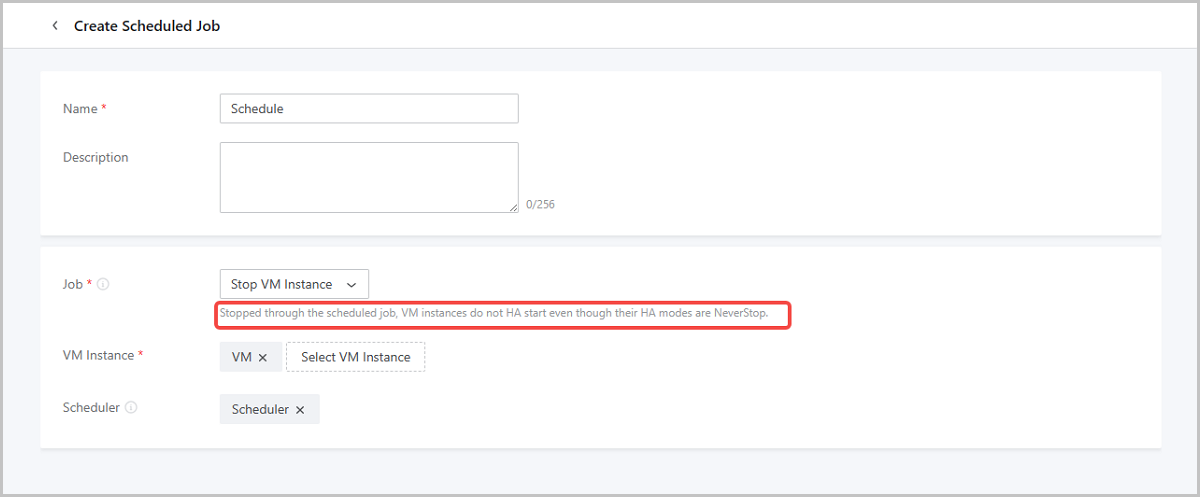
Improvements on VM HA Mechanism, Making HA Reboots No Longer Occur after You Stop VM Instances Manually or Through a Scheduled Job
- None: The VM instance does not reboot automatically after it is stopped, no matter the stopping is scheduled or unexpected.
- NeverStop: The VM instance attempts to reboot automatically after it is stopped, no matter the stopping is scheduled or unexpected.
ZStack Cloud 5.1.0 improves the NeverStop HA mode, making it triggers an auto VM reboot only when the VM instance is stopped unexpectedly. If the VM instance is stopped manually or through a scheduled job, it does not automatically reboot even though its HA mode is set as NeverStop.
- Unexpected VM Shut Down: If the VM instance is stopped unexpectedly because of it own errors, it attempts to reboot automatically. If the VM instance is stopped unexpectedly due to the faults of the compute, storage, or network it is residing on, it attempts to migrate to another host and reboot automatically.
- Manual or Scheduled VM Shut Down: The VM instance does not reboot
automatically after it is stopped manually or according to schedule,
including:
- Manually perform the stopping VM instance, force stopping VM instance, and powering off VM instance actions on the ZStack Cloud UI.
- Manually run the
shutdown,poweroff, andhaltcommands in the VM OS. - Create a scheduled job on ZStack Cloud to trigger the VM shutdown as planned.
Allows You to Limit the Migration Rate During VM Storage Migration
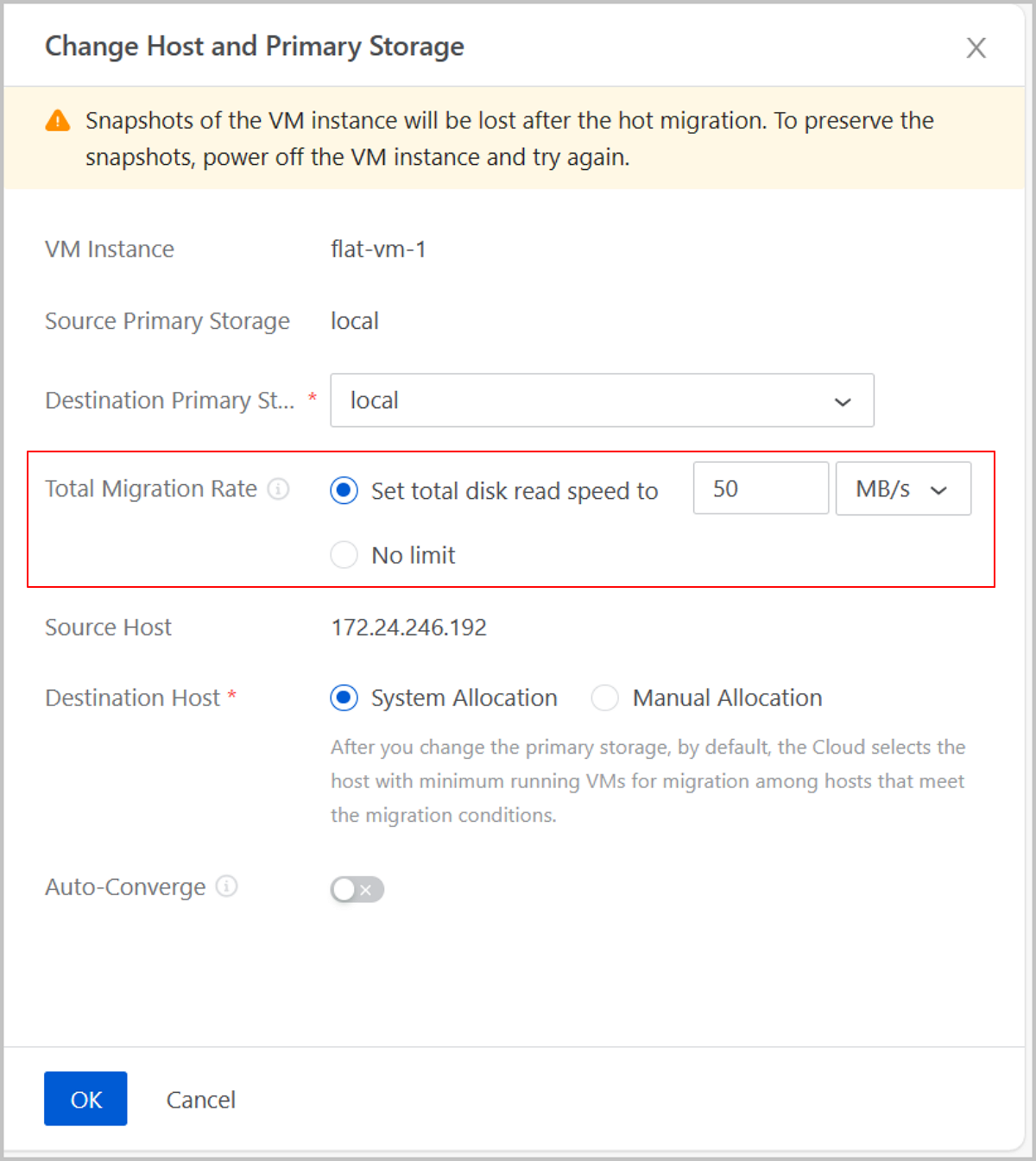
Starting from ZStack Cloud 5.1.0, when you perform a Change Primary Storage or Change Host and Primary Storage operation on VM instances, you can now specify the Total Migration Rate. The system limits the maximum I/O read rate of the VM instance and its attached volumes in the source primary storage. In this way, you can proactively manage and control the migration process, reducing I/O contention due to large-scale data migration and lowering the impact on business.
Supports Hot Migration and HA for VM Instances with VF NICs Attached
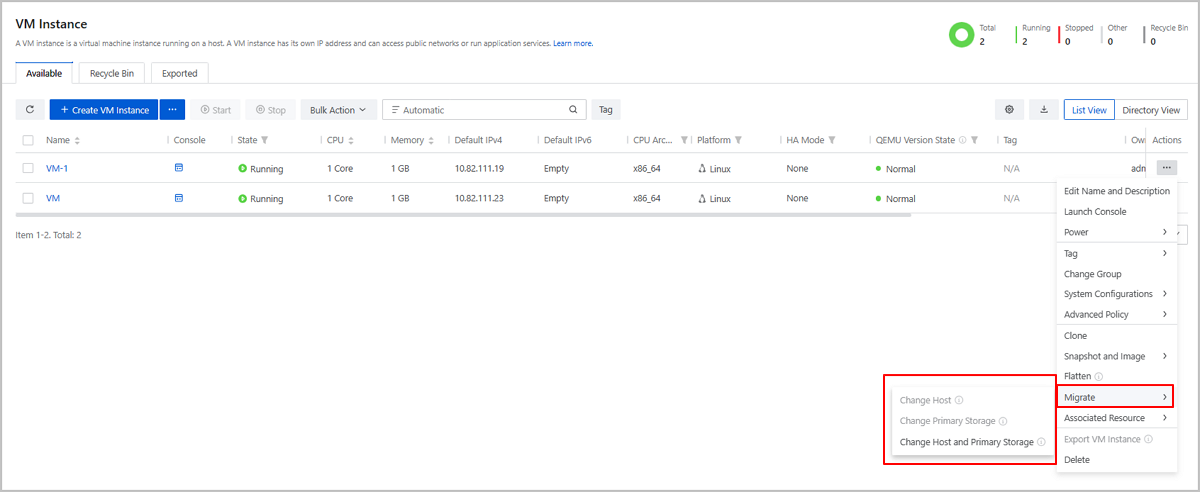
In previous versions, before hot migrating a VM instance with VF NICs attached, you need to manually detach the VF NICs. Starting from ZStack Cloud 5.1.0, you can now hot migrate VF NIC VM instances with one click to achieve an consistent experience with vNIC VM instances and realize seamless migration.
Cloud Storage
Allows Elastic Baremetal Instances to Connect with New-generation High-performance Distributed Storage
Starting from ZStack Cloud 5.1.0, you can make elastic baremetal instances connected with new-generation high-performance distributed storage by attaching block storage volumes to them. Then, the elastic baremetal instances can enjoy a lower-latency and higher-performance storage service.
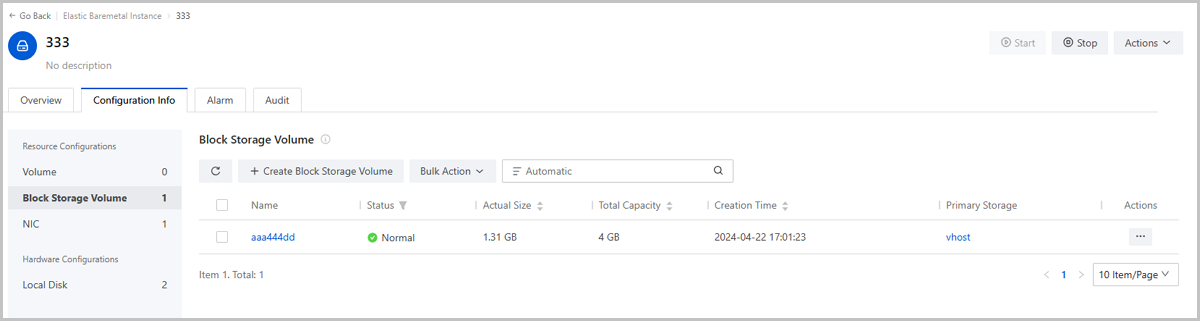
Supports the Lifecycle and Snapshot Management of Block Storage Volumes based on Performance Vhost Primary Storage
Allows You to Hot Migrate a VM Instance across LocalStorage
Starting from ZStack Cloud 5.1.0, when you perform a Change Host and Primary Storage operation on a VM instance that uses LocalStorage, you can hot migrate the VM instance (and all volumes attached to it, if any) across LocalStorage.
Cloud Network
Load Balancing Enhancements
ZStack Cloud 5.1.0 makes the following enhancements on load balancer.
Adds Support for IPv6 Protocol in LB, Improving Network Performance and Security
| Frontend Network | Backend Network | |
|---|---|---|
| Protocol Forwarding | IPv4 | IPv4 |
| IPv4 | IPv6 | |
| IPv6 | IPv4 | |
| IPv6 | IPv6 | |
| IPv4+IPv6 Dual Stack | IPv4 | |
| IPv4+IPv6 Dual Stack | IPv6 |
Dedicated-Performance LB now Supports HA, Ensuring Business Stability
- Active-Backup HA: When creating a load balancer, you can select a
Dual Node (Active-Backup) mode to enable the HA function. When
the main instance fails, the backup instance can seamlessly switch over and
quickly take over the service, which greatly reduces the risk of business interruption.
图 2. Create HA Load Balancer 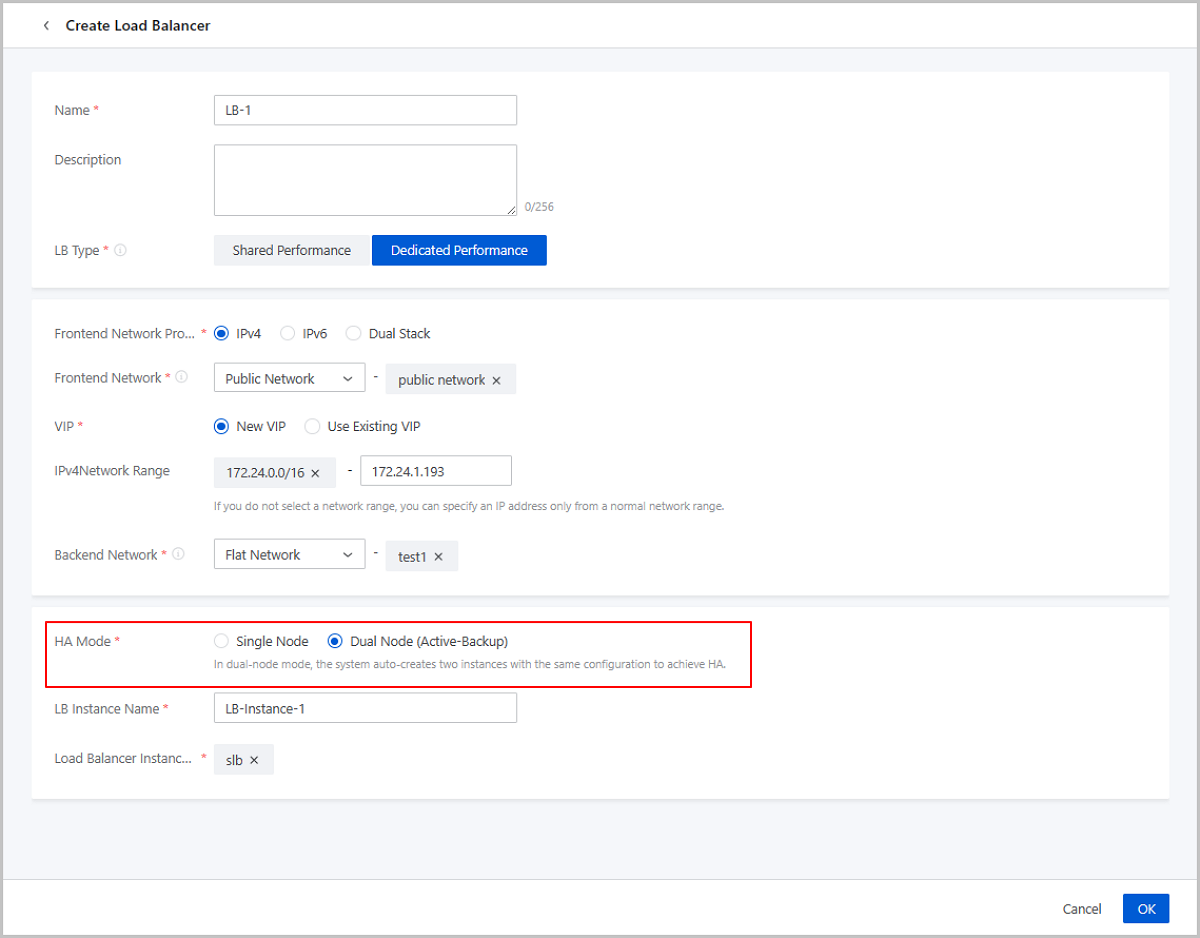
- Instance Configuration Detection and Synchronization: ZStack Cloud adds an LB instance configuration detection
mechanism, which triggers an auto-synchronization when the main and backup
instance configurations are inconsistent. ZStack Cloud also provides you an operation button for manual synchronization to
ensure configuration consistency in case of auto-synchronization failure.
图 3. Manually Sync Configuration 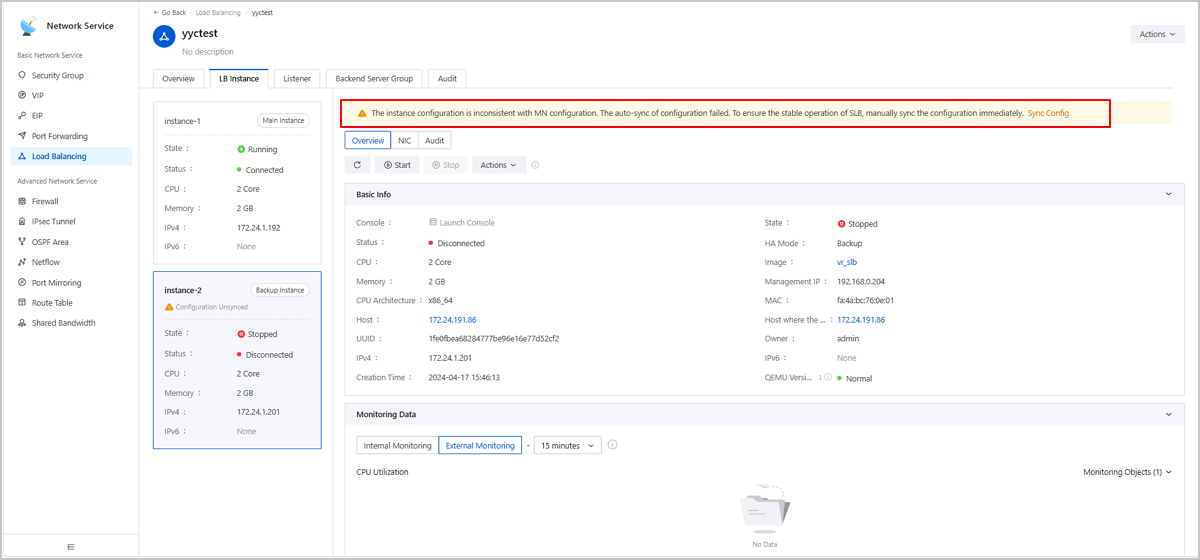
Improvements on LB Listeners
- TCP listeners now support IP Passthrough, allowing backend servers to obtain the actual client IP address.
- HTTP/HTTPS listeners now support Data Compression. You can save bandwidth resources by compressing files of specific types.
- HTTPS listeners now support Protocol Version. You can get a better performance and efficiency when choosing HTTP2.0.
- Load balancer now supports Load Balancer Full Log. When enabled, you can view more detailed logs on TCP/HTTP/HTTPS listeners, making it easier to troubleshoot problems and check request logs.
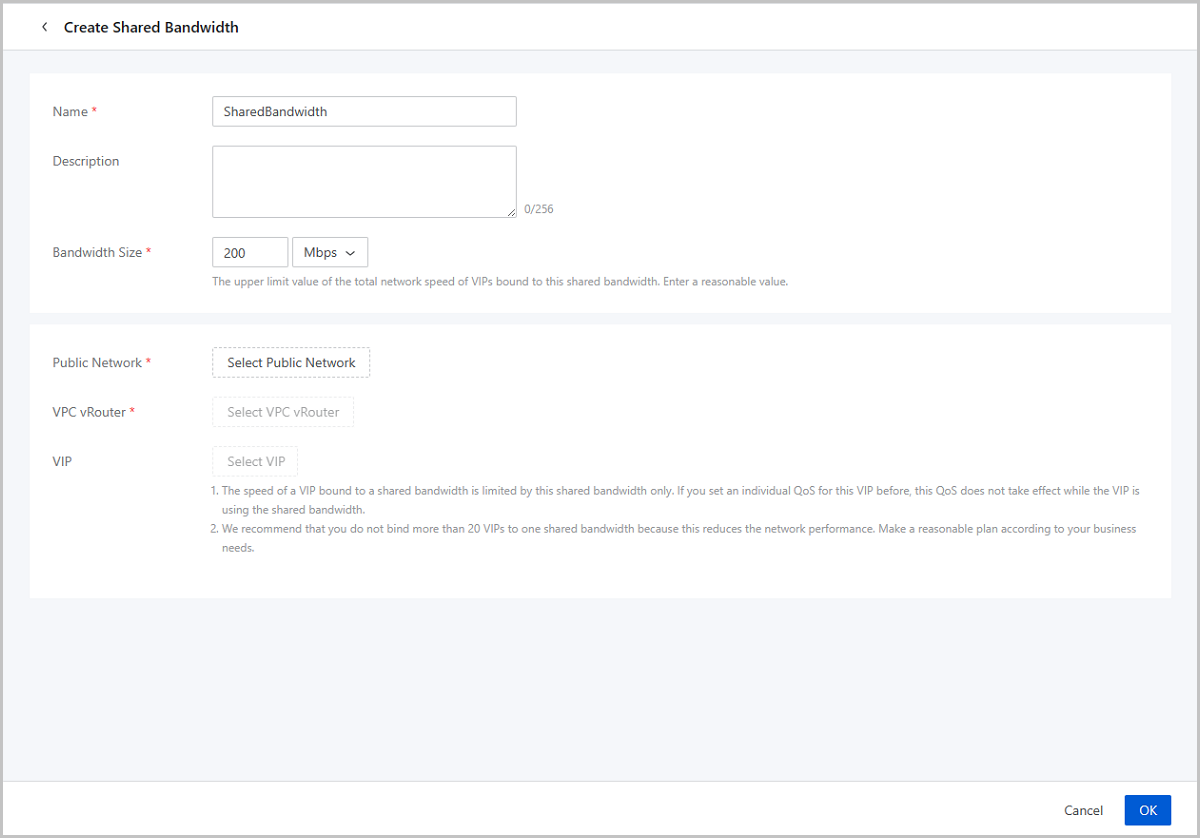
A New Network Service, Shared Bandwidth, Allowing Multiple VM Instances to Share Bandwidth Resources
Starting from 5.1.0, ZStack Cloud provides a new network service, shared bandwidth. A shared bandwidth can be used by multiple public network VIPs and limits the total speed of these VIPs centrally.
Public VIPs are important methods for VM instances on VPC networks to access the public network. For example, you can create EIPs based on public network VIPs and attach the EIPs to VM instances on the VPC network. Then, the VM instances can communicate with the public network through these public network VIPs. If these VIPs are bound to the same shared bandwidth, then, these VM instances can share the same bandwidth and be limited on speed centrally when they access the public network, which helps you reduce the cost on the public network communications.
Allows You to Modify the Type and VLAN ID/VNI of L2 Networks Online, Improving the Network O&M Flexibility
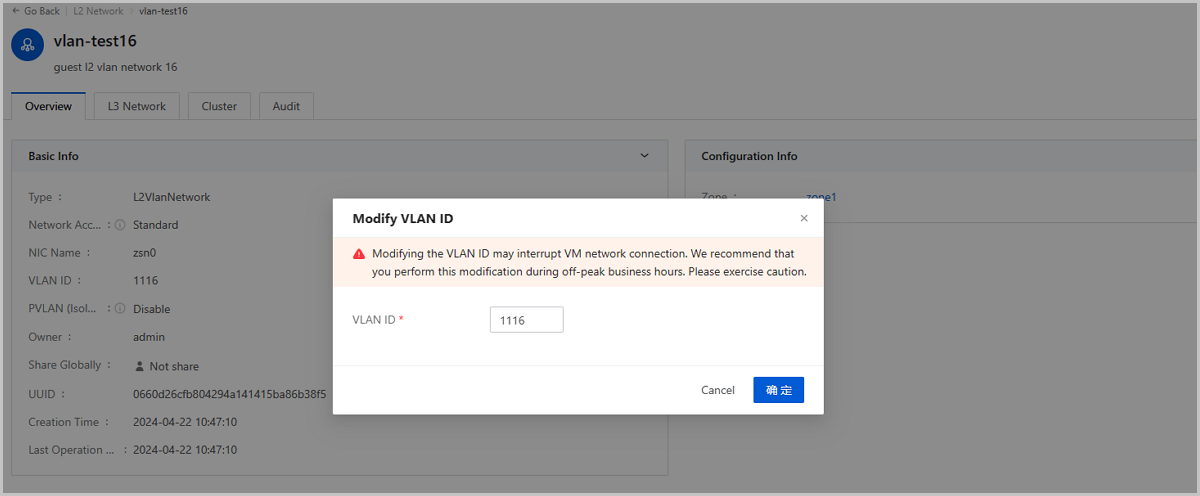
Starting from ZStack Cloud 5.1.0, you can modify the type and VLAN ID/VNI of a L2 network on its details page, providing a more flexible network O&M service.
- Changing an L2NoVlanNetwork to an L2VlanNetwork.
- Changing an L2VlanNetwork to an L2NoVlanNetwork.
- Modifying the VLAN ID of an L2VlanNetwork.
- Modifying the VNI of a VxlanNetwork.
 Note: You cannot modify the L2 network type and VLAN ID/VNI if the L2 network has a
management/flow network attached, or has a baremetal/elastic baremetal cluster
attached, or has configured with a SR-IOV/Smart NIC network acceleration mode, or
has PVLAN (Isolated) enabled.
Note: You cannot modify the L2 network type and VLAN ID/VNI if the L2 network has a
management/flow network attached, or has a baremetal/elastic baremetal cluster
attached, or has configured with a SR-IOV/Smart NIC network acceleration mode, or
has PVLAN (Isolated) enabled.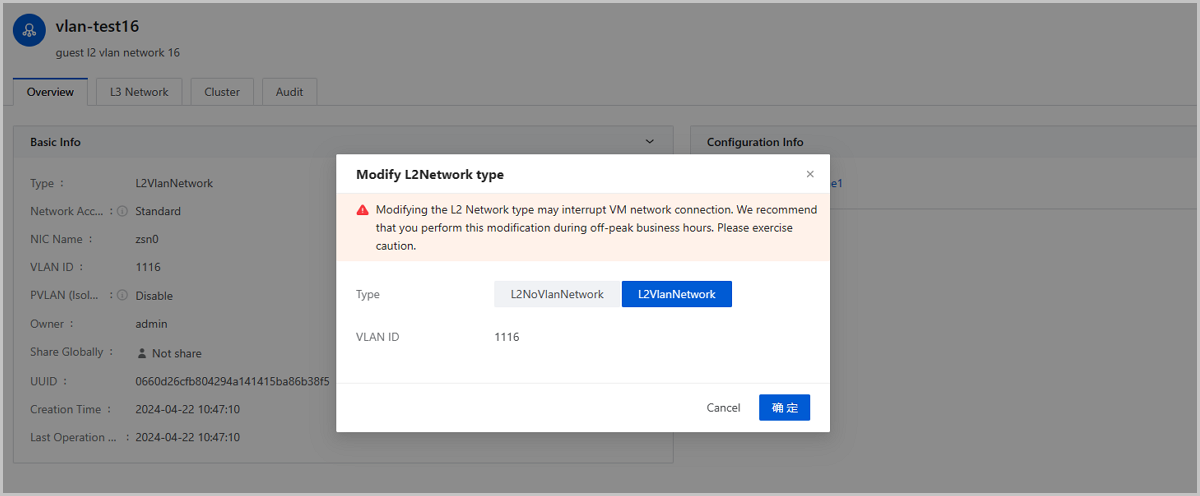
No Longer Uses 223.5.5.5 as the Default DNS Address for L3 Networks
Starting from ZStack Cloud 5.1.0, 223.5.5.5 is no longer used as the default DNS address of public and flat networks. If you do not manually specify a DNS address for a public/flat network, the system does not configure a DNS service for this network automatically.
Platform O&M
Allows You to Obtain the Monitoring Data of more Cloud Resources Through SNMP
In previous versions, ZStack Cloud has supported SNMP management, allowing you to obtain Cloud resource monitoring data on a third-party platform through SNMP (Simple Network Management Protocol). In the previous version, you can obtain only the monitoring data of hosts on the Cloud through SNMP.
Starting from ZStack Cloud 5.1.0, SNMP supports more metrics. You can obtain the monitoring data of more resources on the Cloud through SNMP, including primary storage, backup storage, VM instances, and VPC vRouters.
Allows You to View HA Log and Auto-Scheduling Log Details
Starting from ZStack Cloud 5.1.0, new information items, Job Description and Trigger Reason, are added to the HA log and auto-scheduling log main lists. If you click Job Description, a log details page is displayed to provide more log details. You can quickly find why a HA or auto-scheduling job is triggered on the log list or details page, which makes the resource failure troubleshoot easier.
Volume Export Improvements
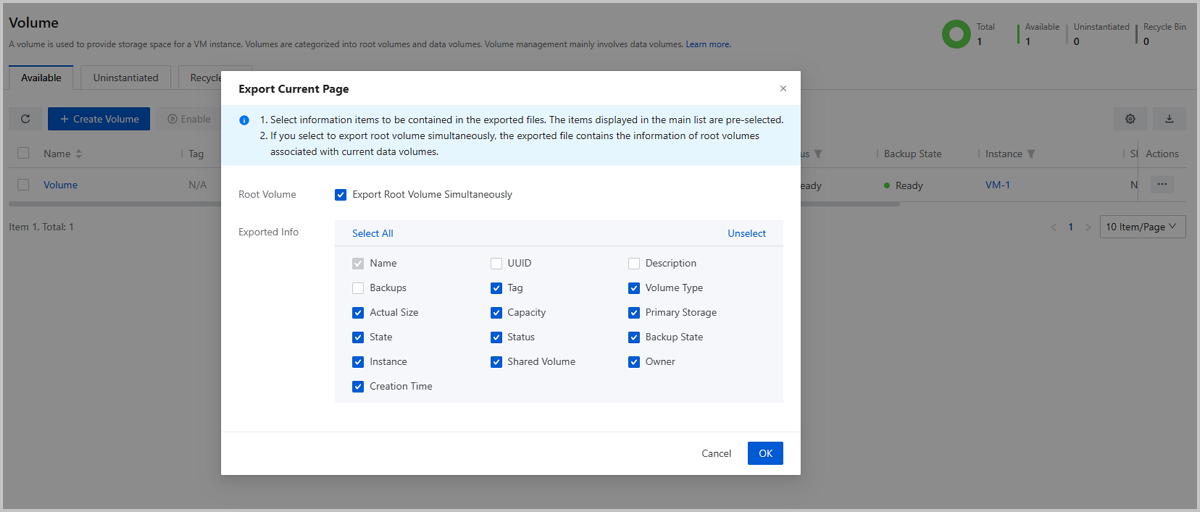
In previous versions, ZStack Cloud allows you to export data volume information as a CSV table which can be looked up conveniently offline. ZStack Cloud 5.1.0 makes the following improvements on the volume export.
Allows You to Export Information of Data Volumes and Root Volumes Simultaneously
Note: You
can select Export Root Volume Simultaneously only when
you export volumes on the Available tab.Allows You to Customize the Information Items to be Exported
Starting from ZStack Cloud 5.1.0, you can customize the information items that you want to be contained in the exported CSV file. This effectively the flexibility of the volume export.